 China International Pet Show
Exclusive Interview with the 1st Runner-up of the 2025 CIPS International Aquascaping Contest (CIAC)
The CIPS International Aquascaping Contest (CIAC) co-founded in 2016 by the Aquascaping Branch of China Fisheries Association and China International Pet Show (CIPS), the CIPS International Aquascaping Contest (CIAC) officially kicked off in 2017. The organizers have joined hands to unite aquascaping enthusiasts worldwide, spark their interest and ignite their passion for the art. Through the contest, every participant is motivated to pursue continuous innovation and surpass themselves. Meanwhile, it helps broaden the public’s horizons regarding aquatic landscapes and popularize relevant knowledge.
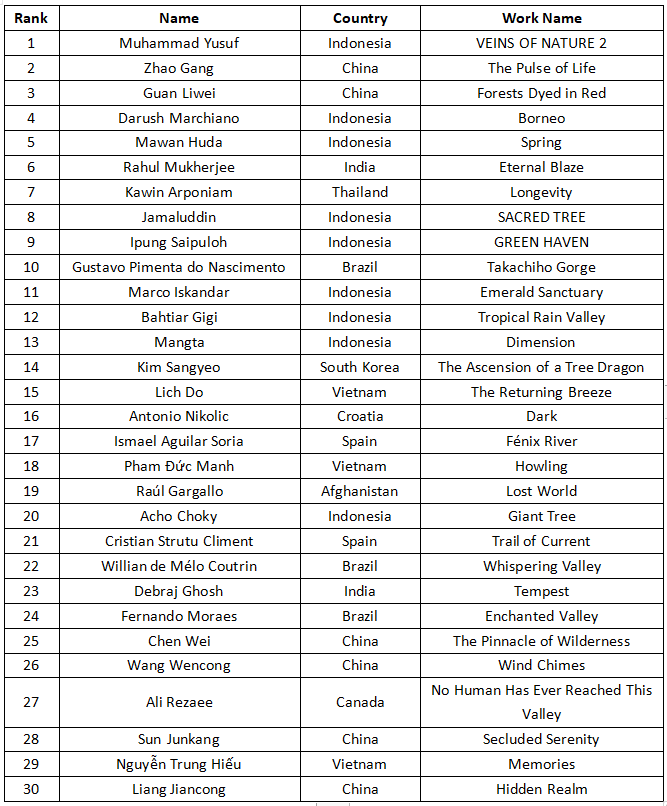
Top 30 Winners of the 2025 CIPS International Aquascaping Contest
After a series of intense and highly creative competitions at the 2025 CIPS International Aquascaping Contest, outstanding Chinese contestant Zhao Gang delivered an exceptional performance with his work The Pulse of Life. Endowed with remarkable design talent and profound understanding of aquascaping art, he claimed the 1st Runner-up honor. After the contest, Zhao Gang shared his experience and creative insights. Now, let us delve into his competition journey, sources of inspiration, as well as his passion and pursuit for aquascaping art.
For the champion’s interview, please visit: Exclusive Interview with the Champion of the 2025 Great Wall Cup International Aquascaping Contest (CIAC) & Judges’ Comments
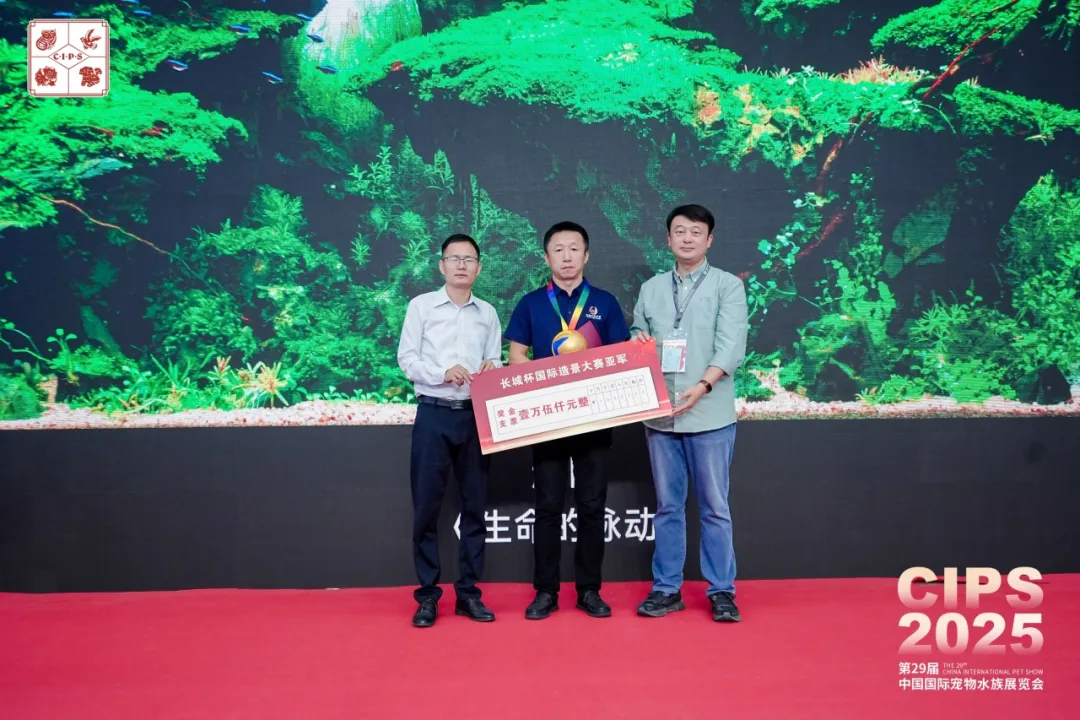
Exclusive Interview with the 1st Runner-up of the CIPS International Aquascaping Contest (CIAC)
Q: Could you please give a brief self-introduction?
A: My name is Zhao Gang, and I’m 53 years old. I’m an avid aquatic landscape enthusiast. Back in 2016, by chance, a colleague introduced me to the art of cultivating aquatic plants in fish tanks in such an artistic way. From that moment on, I was deeply captivated and have been devoting myself to learning and practicing ever since.
As for the Great Wall Cup Aquascaping Contest, it is regarded as a world-class authoritative event among us aquascaping lovers. I first learned about it through aquatic forums and discussions with friends in the circle, and I have always seen it as a precious platform to test my learning outcomes and creative capabilities.
Q: Where did you get the inspiration for your award-winning work?
A: The title The Pulse of Life was inspired by a BBC documentary about the relationship between humans and nature. Through creating a profound underwater canyon landscape integrated with natural elements, this work tries to interpret the eternal and harmonious symbiotic relationship between life and nature.

Q: What unforgettable experiences or challenges did you encounter during the creation of this work?
A: What impressed me the most is the entire process, from adjusting the hardscape structure and arranging aquatic plants to the long-term maintenance until the final landscape took shape. The days of meticulous work and waiting turned into indescribable satisfaction and joy at the moment the work was completed.
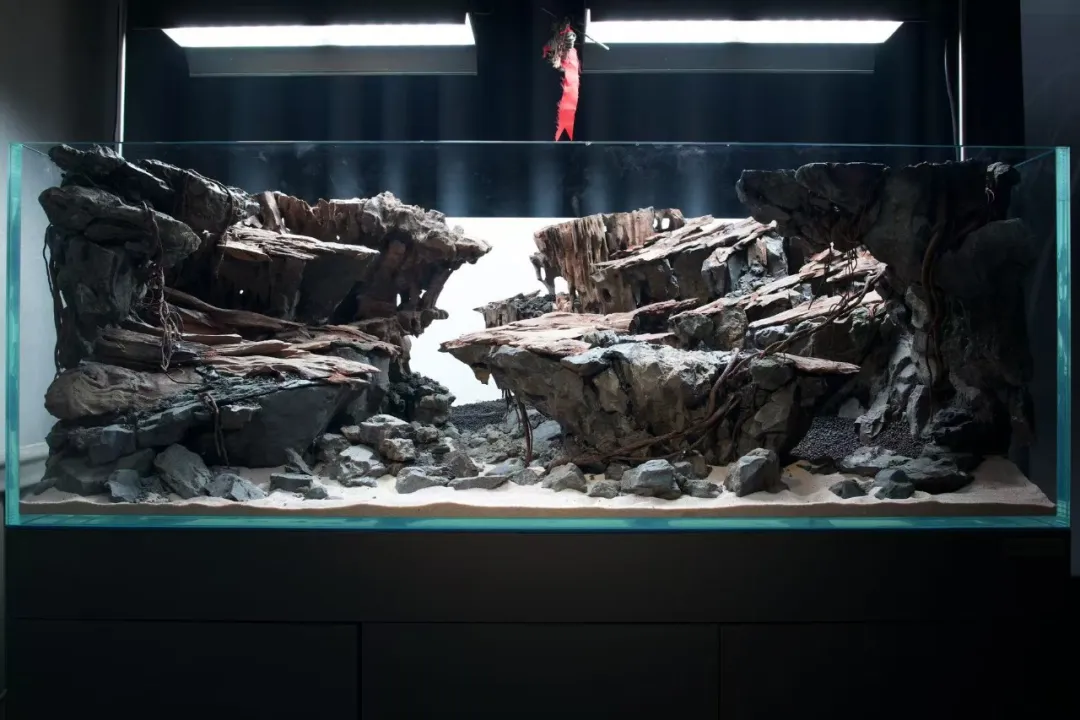
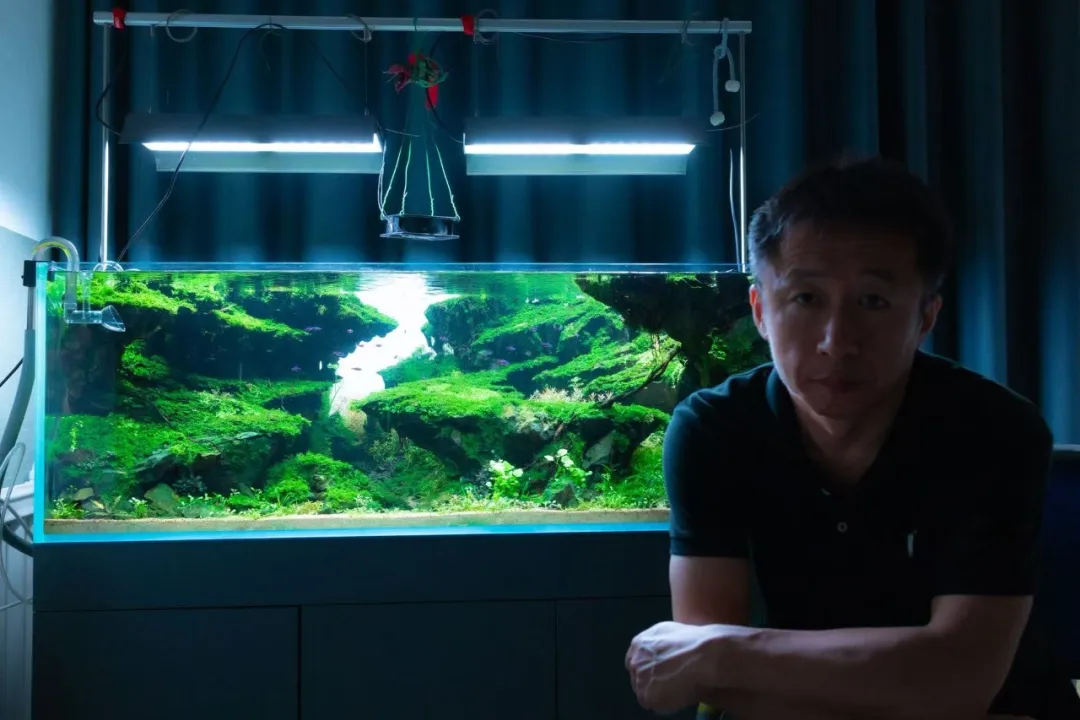
Q: What precautions should be taken for the daily maintenance of your work? In addition, could you share some photography tips on how to better capture and showcase the unique charm of the work?
A: For daily maintenance, I mainly follow these key points: replace about one-third of the water every three days to maintain stable water quality; supply CO₂ continuously at a rate of approximately 2 bubbles per second; provide 6 hours of timed lighting every day to ensure sufficient photosynthesis for aquatic plants. Besides, regular pruning of aquatic plants is essential—it not only maintains the desired shape but also promotes growth, keeping the landscape in the best viewing condition at all times.
As for photography techniques, I use a DSLR camera. Before shooting, I turn off all indoor light sources except the aquarium light to avoid reflection interference. Meanwhile, I hang a blackboard at an angle of about 35 degrees above the front of the fish tank to block part of the top light, allowing the light to diffuse fully into the tank. The camera parameters are generally set as follows: shutter speed of 1/160 seconds, aperture around f/8, and ISO adjusted between 900 and 4000 according to the actual light conditions.
Q: Could you share your acceptance speech?
A: First of all, I would like to sincerely thank CIPS for building such a high-level platform as the CIAC, giving us enthusiasts the opportunity to showcase our works and passion. At the same time, I want to thank the seniors and friends who have given me guidance and encouragement along the way, as well as my family who have always supported me. Finally, I want to thank nature—it will always be our best source of inspiration and teacher. This trophy is not only a milestone for me at this stage but also a new starting point for my future creative journey.
Q: What new plans or goals do you have for your future creation in the field of aquascaping art?
A: I hope to further explore my personal style in future creations, integrate deeper thoughts and insights, and also look forward to having the opportunity to share my accumulated experience with more friends who have just started this hobby, moving forward together with everyone.
Q: How many sessions of the CIAC have you participated in so far? In your opinion, what are the unique characteristics or highlights of the CIAC? In addition, if you have anything to say to the organizers, please feel free to share.
A: This is my third time participating in the CIAC. In my eyes, the most distinctive feature of the CIAC lies in its rigorous rules and extensive international influence. Whether it is the competition system design, the panel of judges, or the evaluation criteria, all aspects reflect the professionalism and dedication of the organizers. It is not only a competition but also continuously promotes the progress of Chinese aquascaping art and facilitates the exchange and integration between us and the international aquascaping community.
Here, I would like to express my sincere gratitude to the organizers: thank you for consistently holding such a high-standard event for many years and building a stage for us to realize our dreams. I sincerely wish CIAC a brighter future, leading Chinese aquascaping art to shine more brilliantly on the world stage!
The Charm of the Work and the Essence of the Contest in the Judges’ Eyes
At the 2025 CIPS International Aquascaping Contest (CIAC), judges Chen Youlin (Taiwan, China), Yang Xiwei (Malaysia) and Cho Jae Sun (South Korea) conducted a comprehensive and detailed evaluation of the entries based on strict criteria. The evaluation covered six dimensions: artistic image, composition and aquatic plant layout, technical strength, long-term maintainability, expression of naturalness, as well as fish matching and presentation, revealing the artistic charm and professional value behind the works.
Judges’ Comments by Chen Youlin (Taiwan, China)
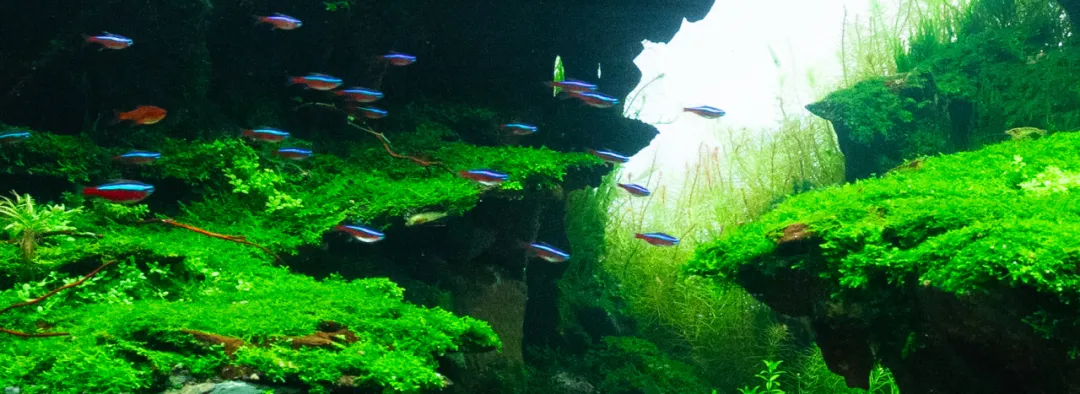
The entire composition cleverly uses stones of varying sizes, and the staggered arrangement creates a strong and rich sense of layering. Despite the large amount of stone used, the landscape does not appear the least bit depressing; on the contrary, it presents a stunning visual impact. The light and shadow treatment is particularly exquisite—the shadows of the stones echo the illuminated surfaces of the plants, enveloping the entire scene in a harmonious and balanced atmosphere. The background blank space and the overall proportion are well-coordinated. The work demonstrates a high degree of completion, fully reflecting the creator’s profound artistic skills and design literacy.
Judges’ Comments by Yang Xiwei (Malaysia)
The hardscape layout of this work is clearly the result of in-depth thinking and careful arrangement. From the extension and division of the zigzag “Z” shaped depth of field in the blank space, we can see the creator’s great efforts in hardscape design and spatial planning. The overall presentation is sophisticated and elegant, and this work has reached a quite high level in the field of hardscape design.
Another commendable aspect is the implicit repeated and layered structure in the work, which constitutes the soul of the entire piece and endows it with a profound and mysterious artistic conception.
However, in terms of plant maintenance, I think there is still room for improvement. The moss looks elegant and natural, but the stem plants appear somewhat fragmented and lack the lushness brought by time, especially in the middle of the foreground and the aquatic plant treatment in the blank space of the background. In addition, the two tree roots extending from the left and right sides of the front section of the work are slightly abrupt.
As an aquatic plant aquascaping enthusiast who is also passionate about hardscape design, I must admit that the hardscape structure of this work has exceeded my current level. Therefore, I sincerely congratulate the creator of The Pulse of Life—the completion level of the hardscape in this work is comparable to that of a championship-winning piece. If the aquatic plant matching and maintenance details can be further refined, it will undoubtedly be even more outstanding.
Judges’ Comments by Cho Jae Sun (South Korea)
This work first strikes the eye with a strong visual impact, and at the same time, it presents excellent structural integrity and stability through dense and well-organized planting. The layered composition created by using rock terrain is particularly remarkable—the upper and lower structures are connected smoothly like a waterfall, forming a sense of depth as if gazing into a deep valley. This goes beyond ordinary perspective processing and demonstrates design precision comparable to real geological strata and cliffs.
The texture of the moss spreading on the rock surface greatly enhances the ecological atmosphere of the work. The artist balances each level by adjusting the texture and size of the plants, and there is almost no redundant or rigid repetition. The stability of this planting also reflects excellent long-term maintenance capabilities.
The open space set in the central area constitutes an excellent “visual resting point”, which contrasts with the surrounding high-density areas and adds a sense of rhythm to the overall composition. The precise control of light direction and contrast effectively highlights the main visual path, allowing the viewer’s eyes to flow naturally through the depth of field, demonstrating a thorough and thoughtful design approach.
The strong natural character expressed by the entire work, the coexistence of order and complexity in the texture, and the balanced ecological presentation all reflect the creator’s sensibility and rich experience. This is a work of extremely high completion. Thank you for sharing such an outstanding creation and congratulations.
Copyright © 2008-2026 | China Great Wall International Exhibition Co., Ltd.