 China International Pet Show
From Cost Advantage to System Capability: What Chinese Pet Suppliers Shared at Interzoo’s Sourcing Stage
At Interzoo this May in Nuremberg, professional buyers and industry audiences from around the world gathered at Hall 12’s Sourcing Stage. On stage, representatives from Chinese pet companies shared their perspectives on global sourcing, supply chain capability, and the changing dynamics shaping the pet industry.

As one of Interzoo’s dedicated forum programs focused on global sourcing, the Sourcing Stage provided a platform for discussions around procurement, manufacturing, and supply chain collaboration. Through out the four-day program, China International Pet Show (CIPS) brought together representatives from China’s pet food, aquatics, pet products, and intelligent manufacturing sectors to share insights into the evolving capabilities of Chinese suppliers and changing global market expectations.
“The Logic of Procurement Has Changed”
Karena Zhang, Head of Marketing at CIPS

Karena Zhang’s presentation reflected one of the key themes repeatedly discussed throughout the four-day program: global buyers are no longer evaluating Chinese suppliers based on price alone. Stability, flexibility, compliance capability, innovation, and long-term partnership value have become increasingly important in sourcing decisions.
In today’s global trade environment, procurement strategies are being reshaped by cost pressure, tariff adjustments, regional manufacturing strategies, and rising compliance requirements. Sourcing is no longer simply about finding the lowest cost option, but about balancing efficiency, resilience, and long-term operational stability.
China’s advantage, therefore, extends beyond manufacturing scale itself. From diversified production capacity and industrial clusters in Shandong, Zhejiang, and Guangdong, to integrated ecosystems covering raw materials, packaging, logistics, intelligent equipment, and cross-border trade collaboration, a more complete supply chain structure has gradually taken shape.
For many international buyers, sourcing from China today means accessing not only factories, but a mature and continuously evolving supply chain ecosystem.
“You’re Not Just Choosing a Factory — You’re Choosing a System of Trust”
Eliza Cheng, Co-founder at Petideal Pet Food Group

Eliza Cheng, Co-founder at Petideal Pet Food Group, broke down “how to source pet food from China” into three key factors: the right factory, the right product, and long-term partnership.
Pricing, production capacity, and delivery timelines may determine whether cooperation begins. What determines whether it lasts, however, is whether factories can withstand on-site audits, whether raw materials are reliable, whether product quality remains consistent, whether products have passed testing and palatability validation, and whether the supply chain supports full-process traceability.
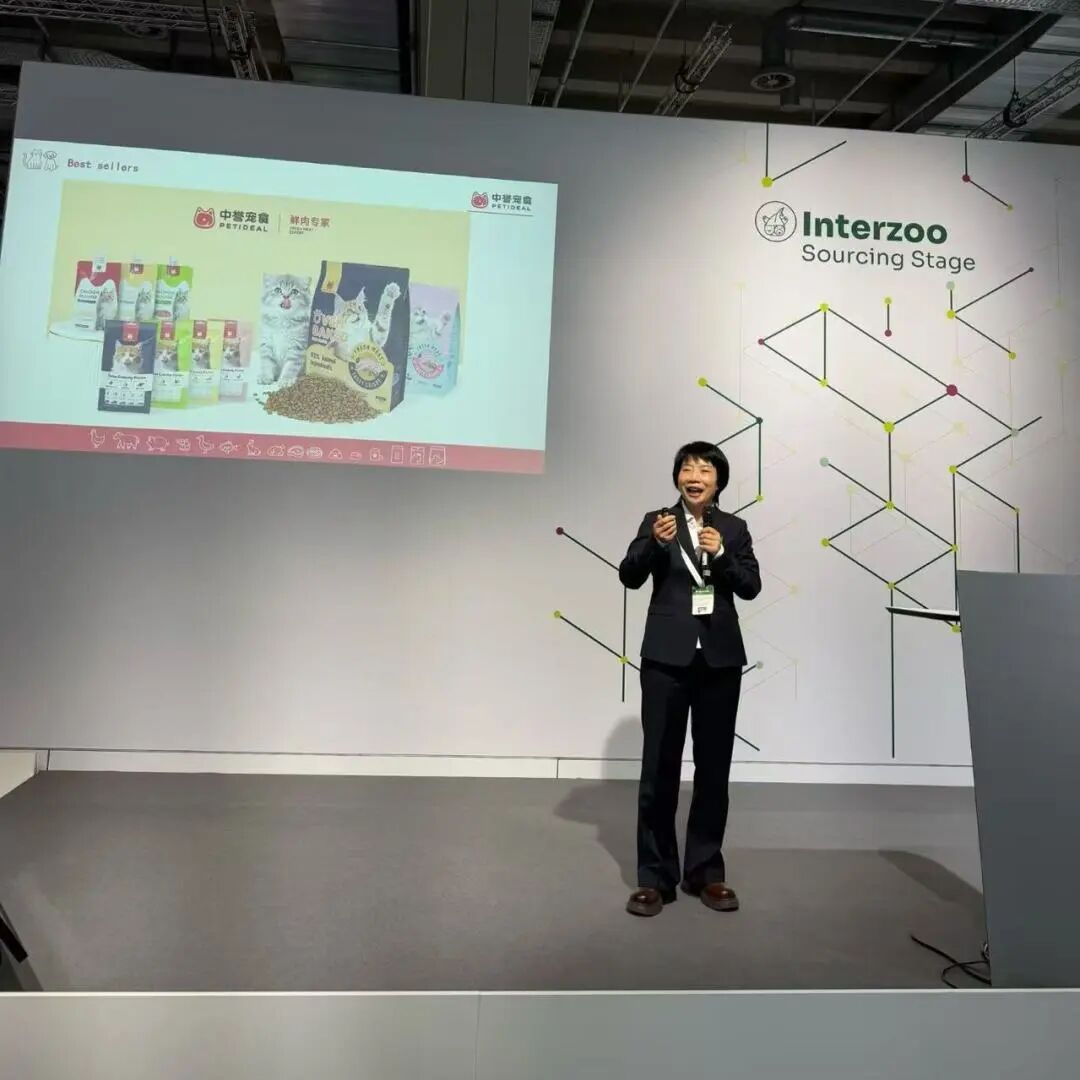
▲ Eliza Cheng, Co-founder at Petideal Pet Food Group, sharing insights on China’s pet food supply chain practices
From quality management certifications and in-house testing centers to cat palatability laboratories and ERP traceability systems, the presentation highlighted a broader shift in buyer expectations: global sourcing decisions increasingly rely on systems that can be verified, traced, and trusted over the long term.
Transparency, ultimately, has become the starting point of trust.
“Low Prices Alone Can No Longer Build Long-Term Competitiveness”
Robert Liu, Head of International BD at Fidapet at FIDA (Best Run Technology Co .,Ltd)
Robert Liu offered a direct assessment of the industry’s current stage: China’s pet industry is moving beyond an era driven primarily by low-cost, volume-based manufacturing.
His presentation focused heavily on digital manufacturing and operational upgrades. Automated production lines, AI quality inspection, ERP and MES systems, digital twins, and full-process traceability are making factories more standardized, reliable, and transparent. Digitalization is improving not only production efficiency, but also R&D responsiveness and delivery consistency.
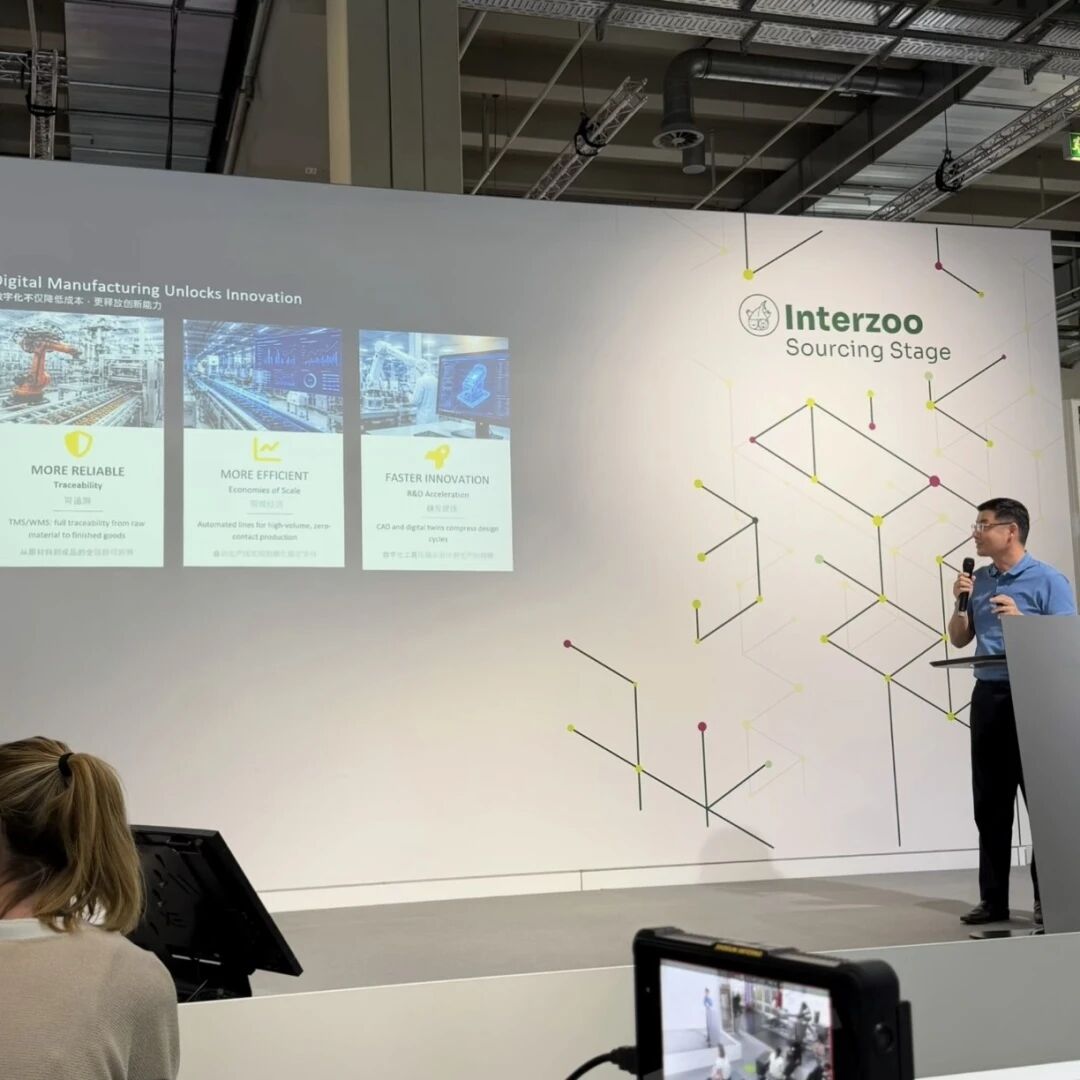
▲ Robert Liu, Head of International BD at Fidapet at FIDA, discussing the next stage of China’s pet industry
At the same time, Robert emphasized that the industry’s growth logic itself is changing. While China’s pet industry has expanded rapidly over the past fifteen years, increasing competition is pushing the market from manufacturing-driven growth toward a model increasingly shaped by products, brands, and channels together.
For many years, Chinese manufacturing answered the question of whether products could be made efficiently at scale. The next question, he suggested, is why consumers will continue choosing those products over the long term. Ultimately, sustainable competitiveness still comes down to product capability.
“For European Buyers, Compliance Often Matters More Than Price”
Mia Ma, Brand Sales Director at Shandong Zhongke Kangyuan Biotechnology Co.,Ltd.

Mia Ma provided a systematic overview of China’s pet food manufacturing and export trends.
Her presentation began with rising premiumization and humanization trends in China’s domestic pet market. Demand for human-grade ingredients, high-meat-content recipes, natural formulations, and health-focused nutrition continues driving manufacturing upgrades across the industry. Product categories are also expanding beyond traditional dry food into wet food, semi-moist products, freeze-dried, air-dried, and cold-pressed formats with higher added value.
On the export side, Germany remains one of Europe’s most highly regulated pet markets. The continued entry of Chinese products into Germany and broader European markets reflects significant improvements in manufacturing consistency, quality systems, and international compliance capability among Chinese suppliers.
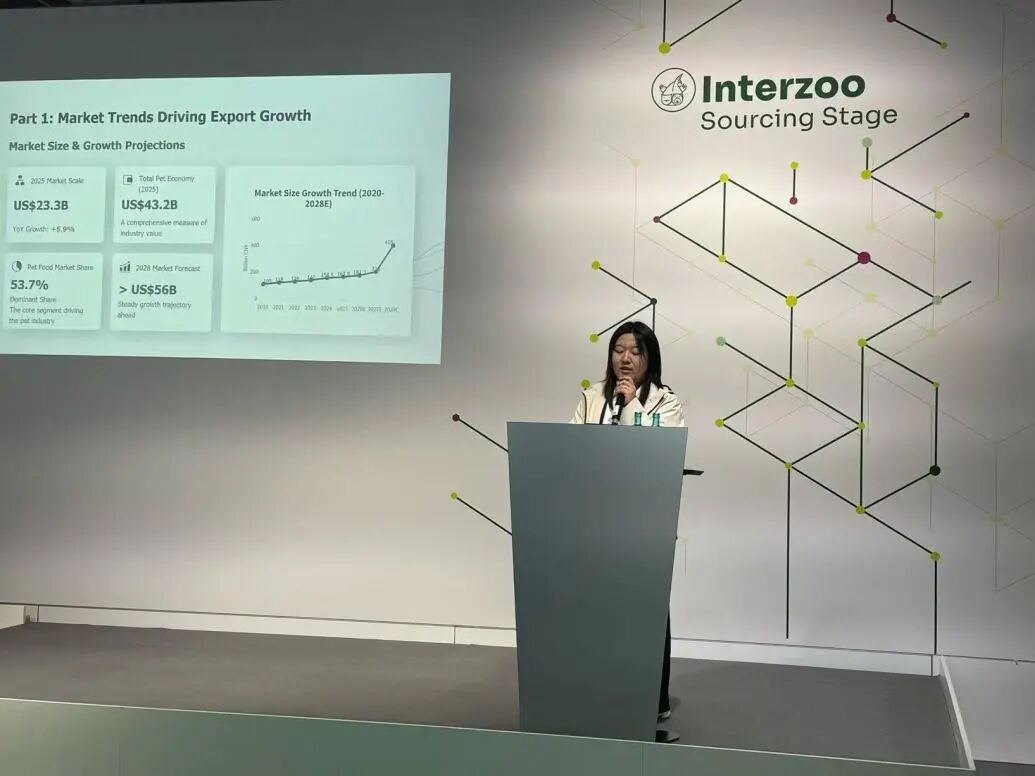
▲ Mia Ma, Brand Sales Director at Shandong Zhongke Kangyuan Biotechnology Co.,Ltd., sharing observations on China’s pet food export trends and international compliance
For global buyers, sourcing pet food from China today involves far more than comparing prices. Regulatory access, quality certification, supply chain transparency, and long-term cooperation capability have become equally important considerations.
“Aquatics Is Not Simply About Products — It Is About Life Support Solutions”
Abby Wang, General Manager at QingDao HaiKe General Sea Salt Co.,Ltd

Abby Wang focused her presentation on coral and marine life care, highlighting the technical depth Chinese aquatics companies are developing within specialized professional applications.
Beginning with artificial sea salt and water quality management, she discussed the key environmental parameters required for coral health, including temperature, salinity, lighting, pH balance, alkalinity, calcium and magnesium ions, nitrates, and phosphates, alongside coral nutrition and aquarium system design.
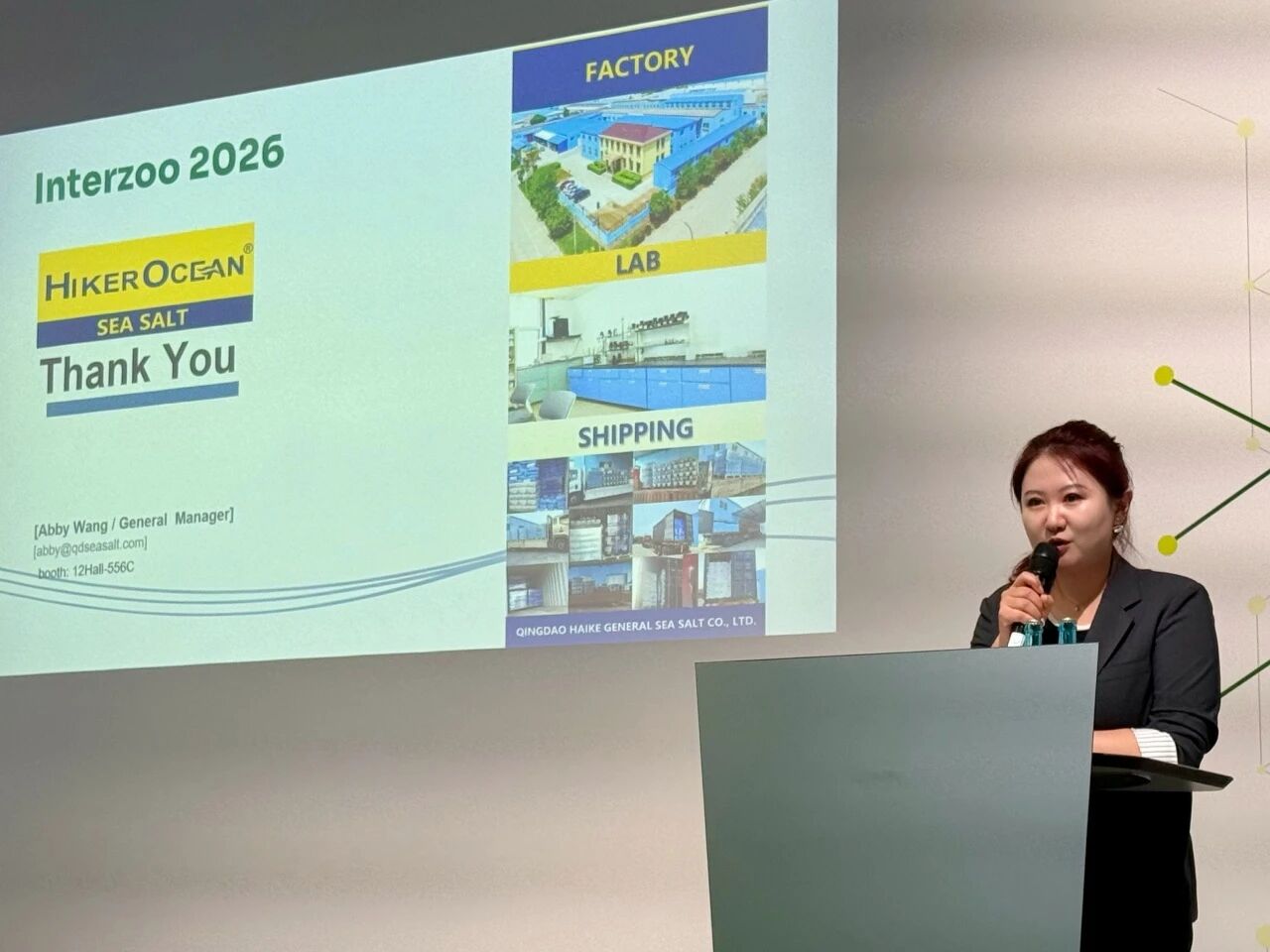
▲ Abby Wang, General Manager at QingDao HaiKe General Sea Salt Co.,Ltd, sharing insights on marine life care and aquatics system solutions
Within the aquatics industry, technical capability is often reflected in areas consumers do not immediately see: whether water conditions remain stable, whether parameters can be precisely controlled, whether systems operate reliably over time, and whether marine life can remain healthy long term.
What Chinese aquatics companies are increasingly providing, therefore, is not only individual products such as artificial sea salt, but integrated scientific solutions designed around marine life care systems.
“Freeze-Dried Products Need More Than Standardization”
Jason Bi, General Manager, Co-founder, Vice Chairman of Shandong Pet Industry Association at Shandong Yupai Biotechnology Co .,Ltd.

Jason Bi focused on the overseas opportunities emerging around customized freeze-dried products.
He noted that many current freeze-dried exports still concentrate on highly standardized categories such as raw meat cubes, freeze-dried fruit and vegetable slices, and cat grass sticks. While these products benefit from mature supply chains, increasing homogenization and price competition are also becoming more apparent. The real opportunity, he suggested, lies in moving from simply “selling existing products” toward co-developing products based on specific market needs.
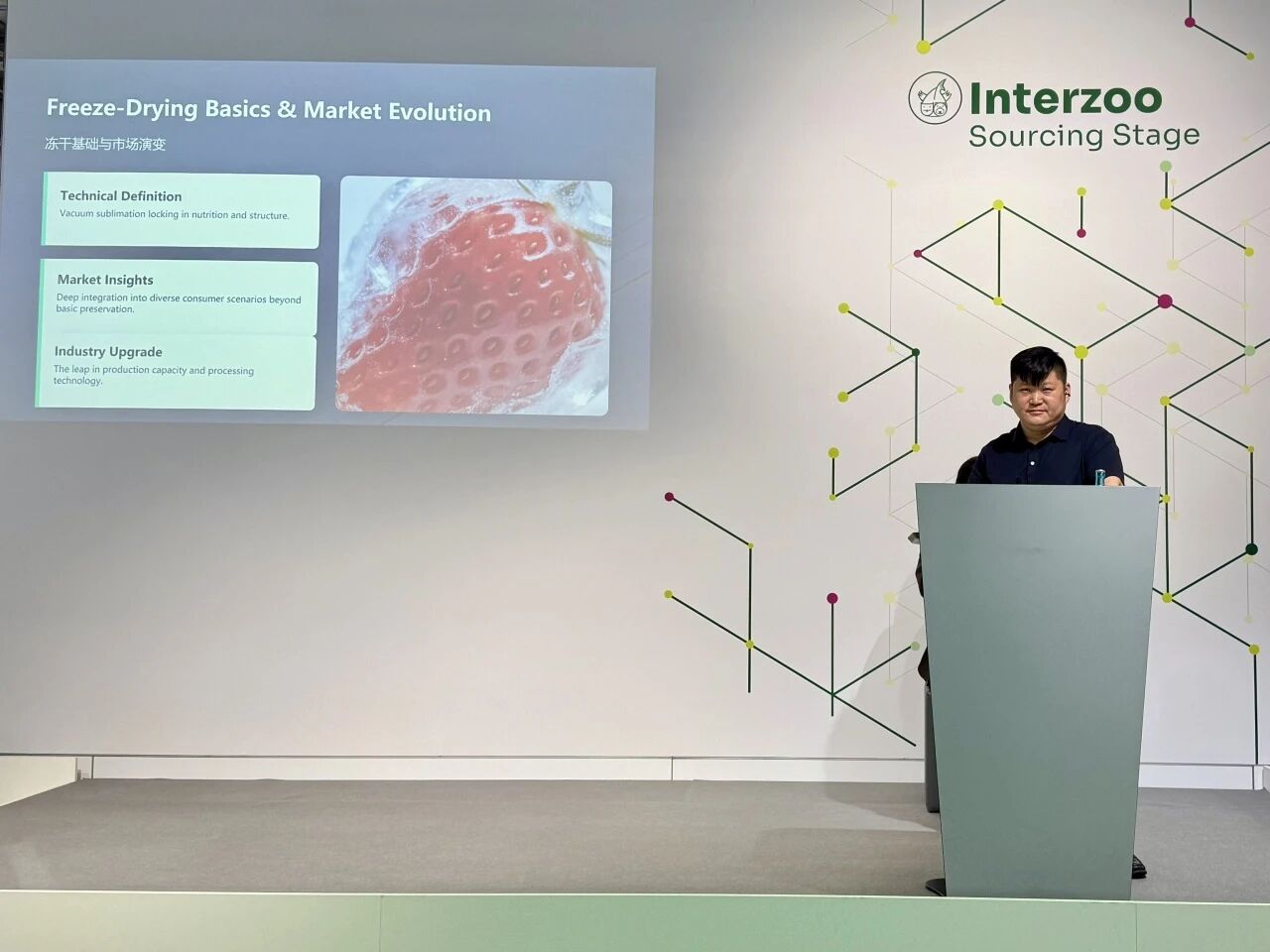
▲ Jason Bi, General Manager, Co-founder, Vice Chairman of Shandong Pet Industry Association at Shandong Yupai Biotechnology Co .,Ltd., sharing trends in customized freeze-dried products for overseas markets
That shift requires suppliers to move beyond competing solely on standard product pricing. Instead, product development increasingly needs to align with local consumption habits, brand positioning, and functional demand within target markets.
From factory selection and requirement discussions to laboratory sampling, pilot testing, and scaled production, Chinese suppliers are becoming increasingly capable of working alongside clients to jointly define products. Supplier relationships are evolving from transactional purchasing models into longer-term collaborative partnerships.

Across four days of discussions, six speakers, and multiple industry perspectives, one shared conclusion emerged clearly:
Global buyers are no longer choosing Chinese pet suppliers based solely on cost advantage. Stable delivery, compliance capability, product innovation, technical understanding, and long-term partnership value are becoming increasingly important factors in procurement decisions.
This is also the message China International Pet Show (CIPS) hopes to continue communicating internationally: helping more global buyers better understand the real capabilities, professionalism, and evolving structure behind China’s pet supply chain.
From November 12–15, 2026, the 30th China International Pet Show (CIPS 2026) will take place in Guangzhou, China. CIPS looks forward to welcoming global industry partners once again to explore new developments across China’s pet industry and discover future opportunities for international sourcing and collaboration.
Copyright © 2008-2026 | China Great Wall International Exhibition Co., Ltd.