 China International Pet Show
Day 1 Recap of the 3rd Aquatic Industry Convention | OFI Asian Butterfly Koi Chapter Inauguration, Global Industry Insights Shared
Day 1 Recap of the 3rd Aquatic Industry Convention | OFI Asian Butterfly Koi Chapter Inauguration, Global Industry Insights Shared
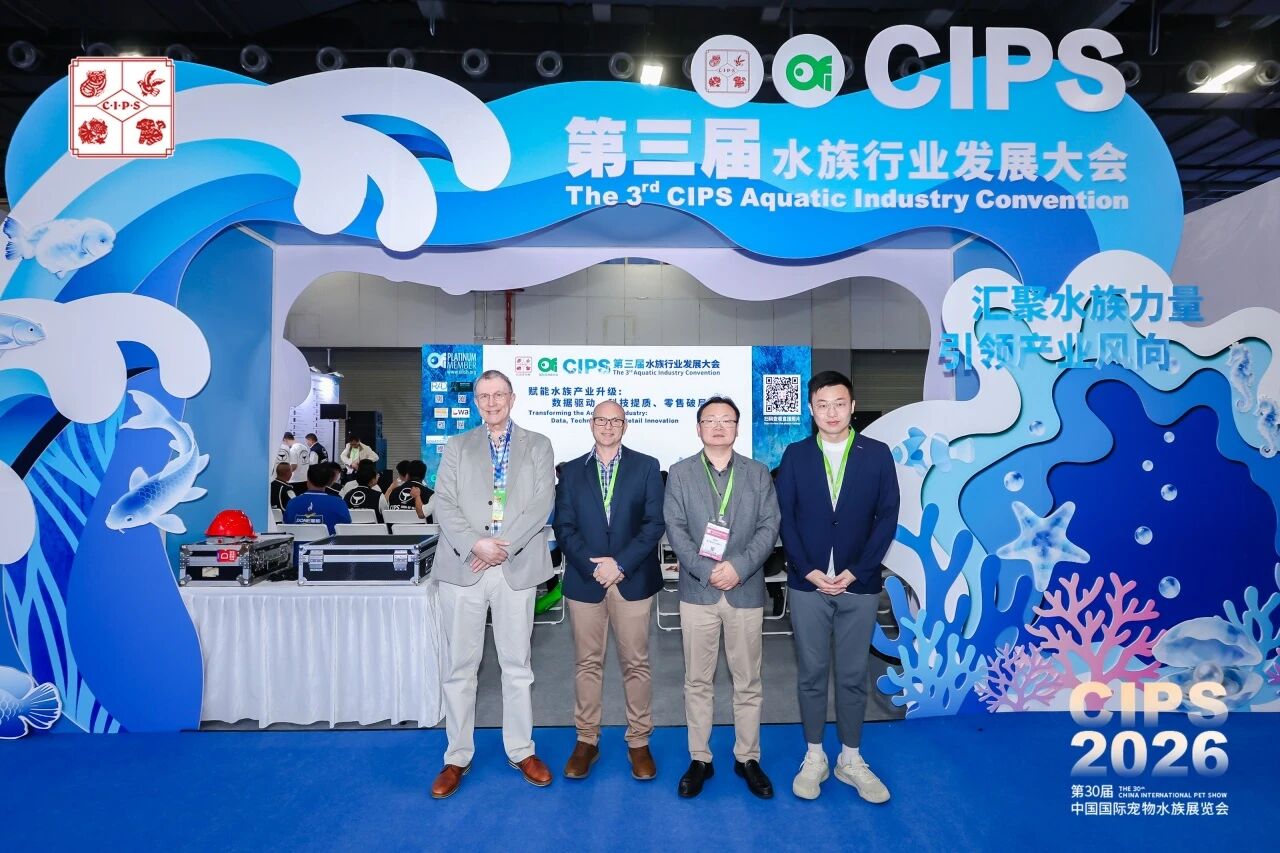
The 3rd Aquatic Industry Convention was successfully held alongside the China International Pet Show (CIPS) from November 12 to 14, 2026 Co-hosted by the Ornamental Fish International (OFI) and CIPS, the convention brought together industry association representatives, researchers, breeding enterprises, leading retailers and digital innovation pioneers from Asia, Europe, the Americas and Oceania. Adopting a global perspective while integrating local practices, participants explored pathways for the transformation and upgrading of the aquatic industry.
Centered on the theme“Empowering Aquatic Industry Upgrade: Data-driven Enablement · Technology for Quality Improvement · Retail Breakthrough”, the convention featured in-depth presentations and panel discussions on core topics including global trade compliance, advanced aquaculture technologies, digital application, sustainable breeding, and innovative aquatic retail models. Faced with industry challenges such as evolving consumption channels, tightening global compliance requirements and the transition to sustainable production, domestic and international guests jointly explored solutions for industry growth to advance technological innovation, compliant trade and experiential retail.
Over the three-day event, forward-looking insights and actionable practical cases across the full industrial chain — covering research breeding, large-scale propagation, branded retail, cross-border supply chains and digital management — were shared. It built an efficient international platform for communication and collaboration among aquatic industry practitioners worldwide. CIPS will release a series of special follow-up briefings to share speakers’ viewpoints, cutting-edge technologies and industry consensus, helping stakeholders grasp market trends and pursue joint progress.
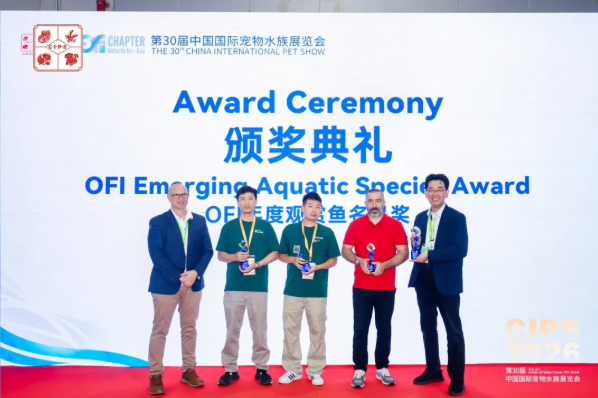
Opening Day of the Convention
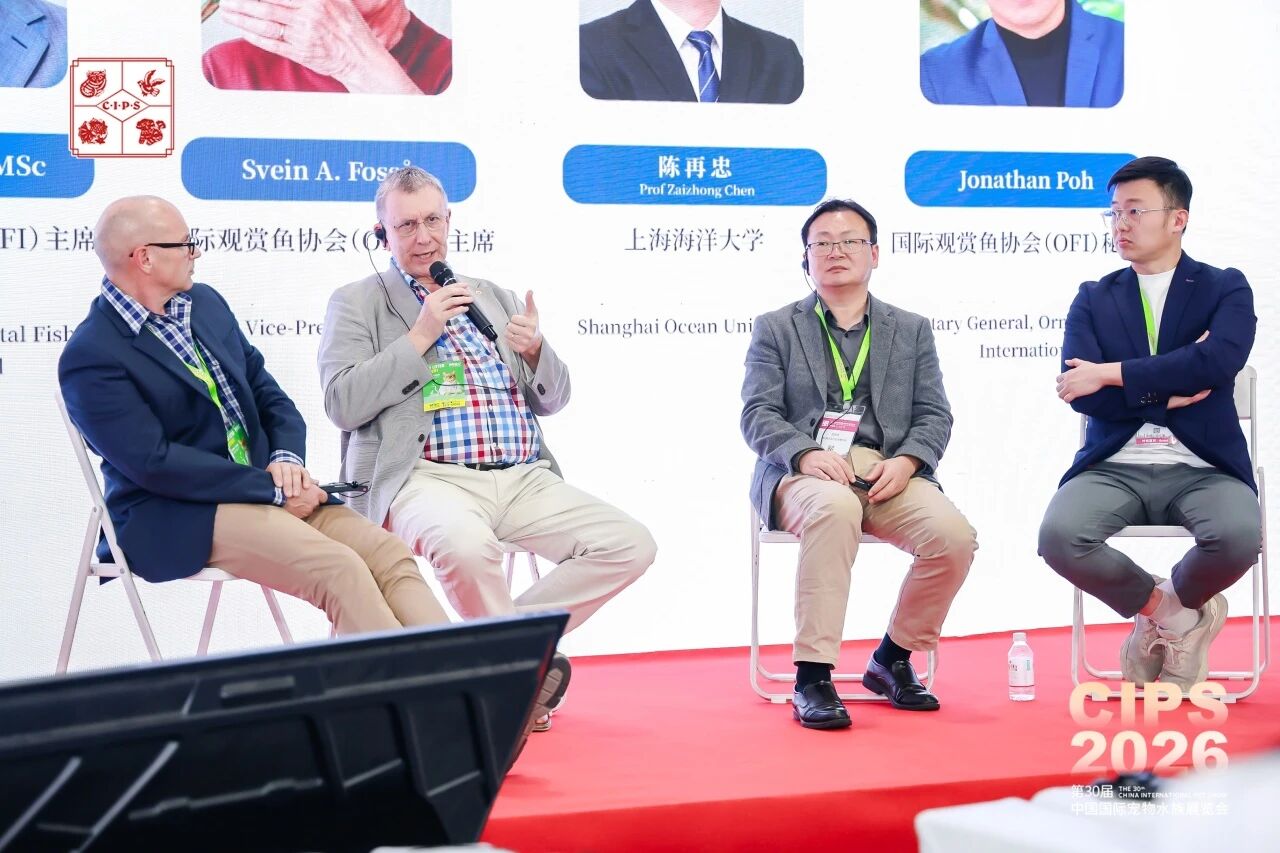
The agenda for Day 1 focused on「Global Trade and Compliance Governance: New Rules for International Markets」. It unpacked shifts in the global ornamental fish trade landscape and hosted discussions on cross-border regulatory policies, biosecurity and animal welfare regulations, offering valuable perspectives for the industry to engage with international markets and conduct compliant trade.
Opening Ceremony
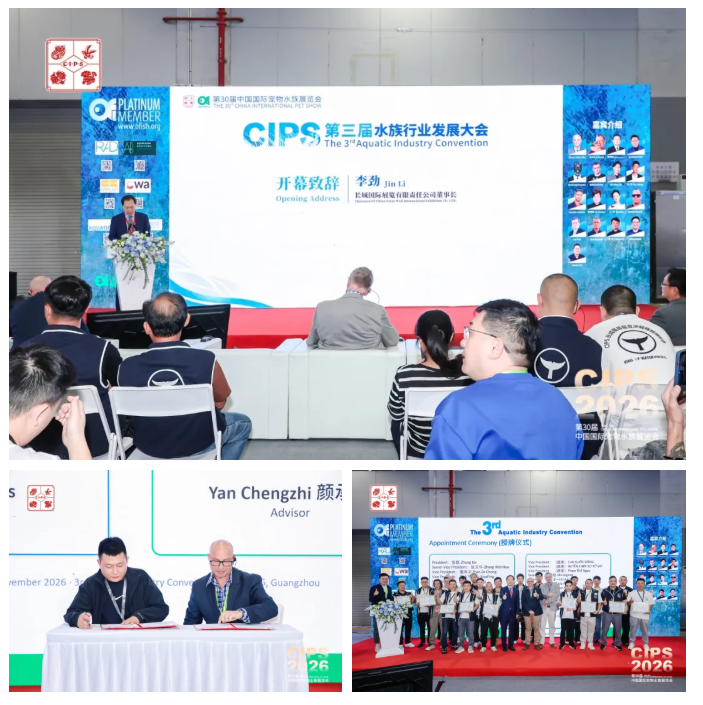
Mr. Li Jin, Chairman of China Great Wall International Exhibition Co., Ltd., has attended the event for two consecutive editions. He was present at the Opening Ceremony and delivered an address, extending a warm welcome to the 17 global industry guests. Coinciding with the opening day of CIPS 2026, the 1st Asian Butterfly Koi Championship kicked off concurrently, alongside the official chartering ceremony of the OFI Chapter for Butterfly Koi-Asia. Mr. Shane, President of Ornamental Fish International (OFI), presented charters to 19 member units on-site, with Mr. Li Jin witnessing this important milestone together.

Shane Willis
Australia | President, Ornamental Fish International (OFI)
State of the Global Aquarium Industry 2026: Trade, Markets and the Forces Reshaping Our Industry
——The future leaders of the industry will undoubtedly be enterprises that deeply embed retail innovation and digital technology into their business DNA.
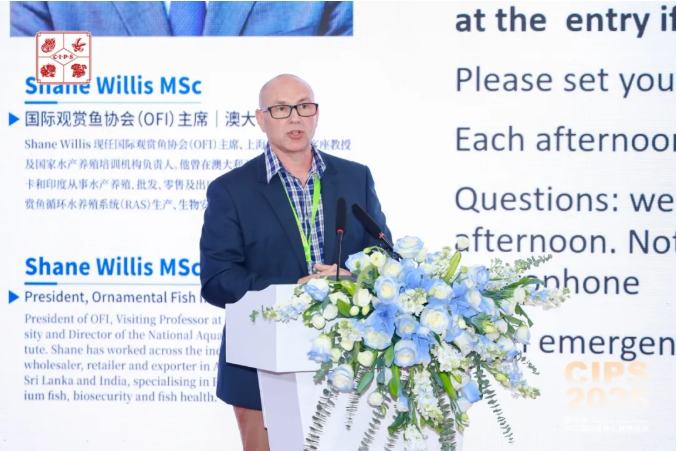
Mr. Shane Willis, President of OFI, noted that preliminary statistics show global exports of live ornamental fish reached approximately USD 313 million in 2025, including USD 263 million for freshwater ornamental fish and nearly USD 50 million for marine ornamental fish. Overall growth was mainly driven by Japanese KOI. Excluding Japanese figures, freshwater ornamental fish exports saw a slight decline.
In terms of trade patterns, Japan ranks first among exporters thanks to high-value koi, followed by Indonesia, Singapore, the Czech Republic and Thailand. On the import side, the United States is the world’s largest importer, with China in second place; the United Kingdom, Germany and Japan are other major importing economies. Europe serves both as a core consumption market and a regional re-export hub, with the Netherlands, Czech Republic and Germany playing pivotal transit roles.
While the industry has demonstrated resilience, global aquatic trade remains under pressure. Air freight costs have risen sharply, and regulations concerning biosecurity and animal welfare are tightening. CITES rules and the EU list of invasive alien species have a profound impact on import and export activities. Meanwhile, market divergence is emerging: the number of hobbyists in mature markets is declining, yet per-capita spending is rising. Demand continues to expand in emerging markets such as China and Brazil, and a new channel landscape is taking shape, driven by social media content marketing and offline in-person experiences.
Against this backdrop, Shane put forward three development pathways:
• Shift retail focus from product sales to experience value delivery and tap into the potential of hybrid retail models.
• Promote the adoption of AI in breeding, transport and customs clearance to fill gaps in fundamental industry data.
• Scale up captive breeding to reduce reliance on wild collection.
The industry should strengthen international collaboration, engage in policy dialogue based on scientific evidence, and improve traceability systems to mitigate regulatory and trade risks.
Looking ahead to 2027, cross-border trade in ornamental fish will maintain moderate growth. Key variables shaping the industry trajectory include the popularity of Japanese koi, demand from the Chinese market, US tariff policies, air freight costs and updates to international conventions.
Data sources: UN Comtrade, OFI 2026 Industry Analysis Report

Svein A. Fosså
Norway | Vice President, Ornamental Fish International (OFI)
President, European Pet Organisation (EPO)
Global Regulatory Update: Emerging Policies Shaping the Aquarium Industry
——Against the backdrop of shifting global regulatory landscapes, outstanding aquatic enterprises should embed scientific reasoning and a sense of responsibility into their core business principles.
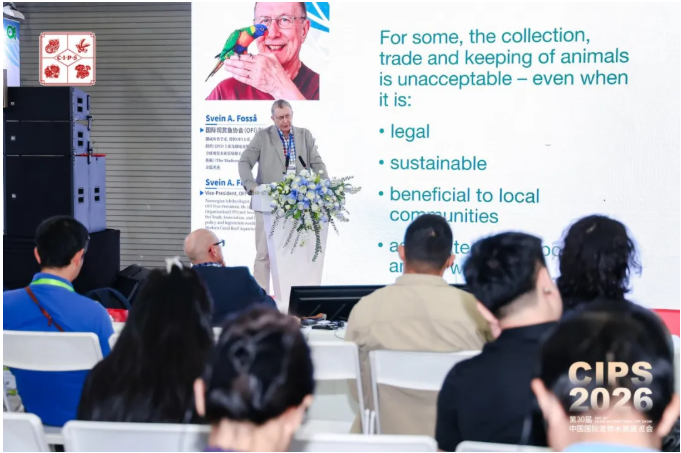
Svein A. Fosså shared insights on regulatory changes for the aquatic and pet sectors in Europe and their implications for global ornamental fish trade.
He noted that rules governing the European market stem not only from legislative texts, but are also shaped by public expectations and animal welfare discourse. Animal welfare, product safety, species suitability and supply chain traceability have become indispensable entry requirements for accessing the European market. A product being cleared for retail placement does not mean it meets local husbandry standards and regulatory obligations. Exporters must fully assess policy divergences across target markets.
In terms of species control, the EU List of Invasive Alien Species continues to expand, with certain ornamental aquatic species now subject to controls. National positive species lists adopted by individual countries represent a major source of pressure for the industry. He stressed that regulatory policies should be evidence-based, balancing animal welfare goals with the practical operational capacity of the sector, and avoiding blanket bans that are disconnected from real-world practice.
Svein underscored the vital value of industry associations. Continuous cross-border professional exchange is needed to support responsible ornamental fish keeping and compliant trade. For export-oriented businesses, focus should extend beyond customs clearance. They need to proactively research destination requirements on biosecurity, animal welfare and species control to mitigate trade risks and access the European market more effectively.

Chen Zaizhong
China | Professor, Shanghai Ocean University
The China Aquarium Market: Trends, Innovation & Future Growth
——Analysed the “output reduction with value growth” pattern of China’s domestic ornamental fish sector and proposed pathways for high-quality industrial development from consumption and technology perspectives.
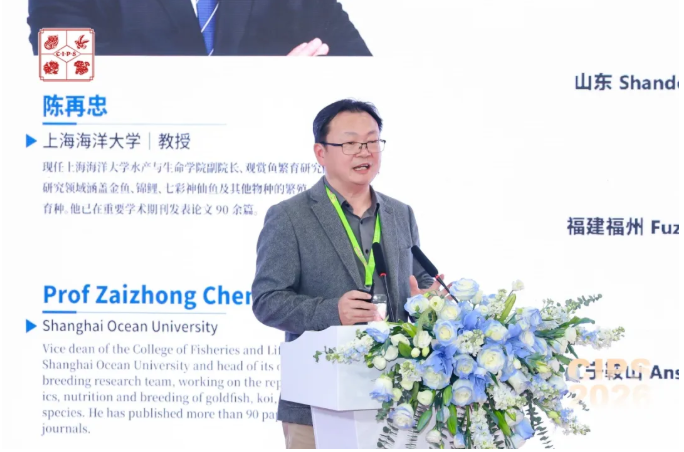
Professor Chen Zaizhong delivered a presentation on the development of China’s ornamental fish industry. Statistics show that the domestic ornamental fish sector features a structural shift of reduced output yet increased value. Aquaculture output peaked in 2018 and has since stabilised at a lower level, while industrial output value keeps rising. The market value doubled between 2017 and 2024, representing a compound annual growth rate of approximately 10.5%. Growth is no longer driven by production volume expansion, but by selective breeding of premium strains, upgraded recirculating aquaculture systems, and value extension across the full industrial chain including aquarium equipment, feed, cultural tourism and related services.
On the consumption side, rising household income, urbanisation and growing demand for home-based therapeutic companionship fuel the expansion of the aquatic hobby market. New scenarios such as desktop nano tanks and aquascaping for commercial spaces continue to emerge. Online channels have formed a tripartite landscape led by Taobao, Douyin and JD, each with distinct strengths in general merchandise, live sales of live fish and high-end smart hardware respectively. Industrial clusters are highly concentrated, with Guangdong and Shandong serving as two core production hubs. China has grown into the world’s third-largest importer of ornamental fish, forming an industrial cycle of “germplasm introduction-selective improvement-re-export”.
Technologically, industrial upgrading is driven by four pillars: RAS recirculating aquaculture, molecular genetic breeding, precision-nutrition feeds and digital intelligence.
1. Recirculating aquaculture achieves over 95% water conservation.
2. Breakthroughs in genome research support molecular design breeding for goldfish, clownfish and other species.
3. Continuous advances in captive breeding technology are expected to reduce reliance on wild harvesting.
4. IoT water quality monitoring, smart aquarium devices and livestream e-commerce are reshaping production and trading models.
Looking ahead, Professor Chen put forward four strategic recommendations: strengthening germplasm foundations, pursuing green efficiency gains, building brands and services, and advancing integration alongside biosecurity governance.
1. The industry should establish germplasm resource banks and molecular breeding platforms to develop varieties with independent intellectual property rights.
2. Promote recirculating aquaculture and improve standards for farming, transportation and quarantine.
3. Develop regional brands and standardise e-commerce after-sales services and live-animal logistics.
4. Expand cultural tourism and educational experience programmes while enforcing controls on invasive alien species and safeguarding aquatic biosecurity.
For the industry outlook, germplasm revitalisation, green facility farming, industrial integration, digital intelligence and compliant governance will be the five major evolutionary directions, paving the way for the sector’s transition toward high-quality development.

Shelby Stensrud
USA | Purchasing Manager, Segrest Inc.
US Market Global Snapshot
——The key to success in the US aquatic market lies in keeping pace with shifting consumption patterns across channels, mitigating cost pressures, and building traceable, value-added supply chain capabilities.
Shelby shared insights into the current landscape of the US ornamental fish market. The United States is a mature aquatic consumer market. In 2025, its import value of live ornamental fish reached USD 75 million, with a large base of households keeping freshwater fish. While the pandemic-driven boom has subsided, market size remains above pre-pandemic levels. Japan has now become the top supplier of ornamental fish to the US.
In terms of consumption and distribution, the channel structure in the US continues to evolve. Sales of aquarium equipment and consumables are shifting rapidly online, whereas live fish transactions remain largely offline. Consolidation is accelerating at the wholesale level, with domestic production complementing overseas imports. Although rising tariffs, logistics and other costs squeeze industry margins, digital farming tools, breeding innovation and veterinary system development empower the supply side. While the number of hobbyists stays steady, consumption is upgrading toward large-tank aquascaping and rare, specialty species. Social media shapes purchasing decisions, and professional brick-and-mortar retailers are growing in importance. This shift also pushes wholesalers to move toward curation, traceability and value-added services.
On the policy front, some regions have introduced restrictions on collection and sales. The industry advocates for science-based advocacy and lobbying. Overall, the US market is not expanding linearly; instead, it is undergoing structural transformation in husbandry practices, information access and consumer behaviour.
Data sources: APPA, UN Comtrade, USDA and other public industry statistics

Nathalie Gamain
Belgium | EU Affairs Officer, Ornamental Fish International (OFI)
Navigating the European Ornamental Aquatic Market: Current Developments, EU Regulatory Trends and What They Mean for Exporters
——This session analyses the mature European aquatic market and breaks down EU market access rules, offering compliance recommendations for exporters.
Nathalie outlined the European ornamental aquatic market and its compliance requirements. Europe stands as a mature and core global import market. In 2025, ornamental fish imports into the EU-27 reached USD 92 million. Combined with the United Kingdom, imports account for more than one-third of global volumes. Germany is the EU’s largest importer, while the Czech Republic and the Netherlands function as regional re‑export hubs. The trade landscape is shifting: shipments are bypassing traditional transit hubs and moving more directly to end-consumer countries. Most mature markets are stable or seeing mild declines, yet aquascaping, nano tanks and shrimp species are bright growth segments. Specialised retail stores remain competitive thanks to professional services, even as the sector grapples with high energy costs, shortages of skilled labour and tightening regulations.
She outlined five mandatory compliance checks for exporters entering the EU market:
1. CITES and EU wildlife trade regulations
2. Animal health certification
3. Phytosanitary certificates for aquatic plants
4. List of Invasive Alien Species
5. GMO controls
Fish farms must meet access criteria including facility safety, disease surveillance and complete traceability records. She also flagged upcoming regulations: revisions to live animal transport rules, advancing animal welfare standards, and the widely debated EU Positive List proposal for pets. OFI advocates science-based, risk-tiered regulation and opposes a blanket positive list approach.
Her recommendations for exporters expanding into the EU cover five pre-entry verifications. Exporters should collaborate with local importers to understand country-specific rules, maintain comprehensive farm documentation and disease surveillance, keep track of policy updates such as transport rules and the Positive List, and leverage OFI’s industry platform to respond to EU regulatory changes.
On 13 November, the convention focused on the core theme“Aquarium Retail Excellence & Commercial Innovation:Business Models That Work”.
This session covered diverse topics including European digital retail, aquascaping formats, lifestyle store upgrades, ornamental fish selective breeding, social media marketing and cross-industry integration. Retail pioneers from multiple countries shared actionable operational strategies to explore growth pathways for aquatic stores.
Stay tuned for in-depth coverage from Day 2.
Copyright © 2008-2026 | China Great Wall International Exhibition Co., Ltd.