 China International Pet Show
DaniReef Column| Worth as Much as a Car: The High-Value World of Asian Fishkeeping
Editor’s Note
In the previous issue of the DaniReef Column –DaniReef Column | CIAC Masters Showcase: Aesthetic Analysis of Five International Masters, Mr. Danilo shared his new insights from the 3rd Asian Clownfish Championship. In this issue, he will present his latest discoveries from large-sized fish competitions.
Large fish (or monster fish) are a highly representative category in China’s ornamental fish industry, with steadily growing attention in recent years. At the China International Pet Show, arowanas,tiger fishes, and stingrays attracted numerous Western aquarium enthusiasts with their unique charm. Due to endangered species protection regulations and strict quarantine policies, arowana and tiger fish are rarely seen in European and American markets. In contrast, stingray, with looser conservation status and legal cross-border circulation, have become one of the most widely traded high-end ornamental fish species worldwide. The varieties bred and improved in China also reach world-class standards.
Through the expo, overseas industry professionals have clearly realized that the value of these ornamental fish goes far beyond their market price; they embody a complete set of mature ornamental fish culture and a sound industrial ecosystem.
Since 2016, CIPS has continuously hosted a variety of professional large fish competitions, promoting the industry through contests, striving to drive the high-quality development of the aquarium industry, and expanding channels for aquarium exchanges between China and abroad.
In 2026, CIPS will celebrate its 30th anniversary, with more exciting competitions to be launched. Stay tuned for updates.
The following is an exclusive report written by Mr. Danilo for CIPS.
Monster fish, freshwater stingrays, Asian Arowana and rare predators are not displayed as exotic curiosities, but as the expression of a precise path: controlled breeding, selected genetics, obsessive care and deep biological knowledge. In this context, price is not the goal—it’s a consequence.
Value, not ostentation
In many Asian cultures, the concept of value applied to a living animal is profoundly different from the Western one. It’s not about showing off, but about recognizing the journey: years of selection, generations of breeding, and strict aesthetic and health standards.
A large Asian Arowana, a Potamotrygon with an exceptional pattern, or a rare predator such as some Siniperca are not simply “rare fish”, but a synthesis of time, expertise and responsibility. That’s why, in some cases, their value can be comparable to that of a car—not for provocation, but by proportion.
In our CIPS video reportage, you can see these animals live, calmly and majestically swimming in the show tanks. By following the video chapters, you’ll encounter monster fish, freshwater stingrays and Asian Arowana at several points—filmed without sensationalism, but with a respectful eye that highlights their presence, behavior and natural grandeur. Video Link: https://www.youtube.com/watch?v=1GmVj-dw2TI&t=2s
Siniperca: the quiet luxury of China’s great predators
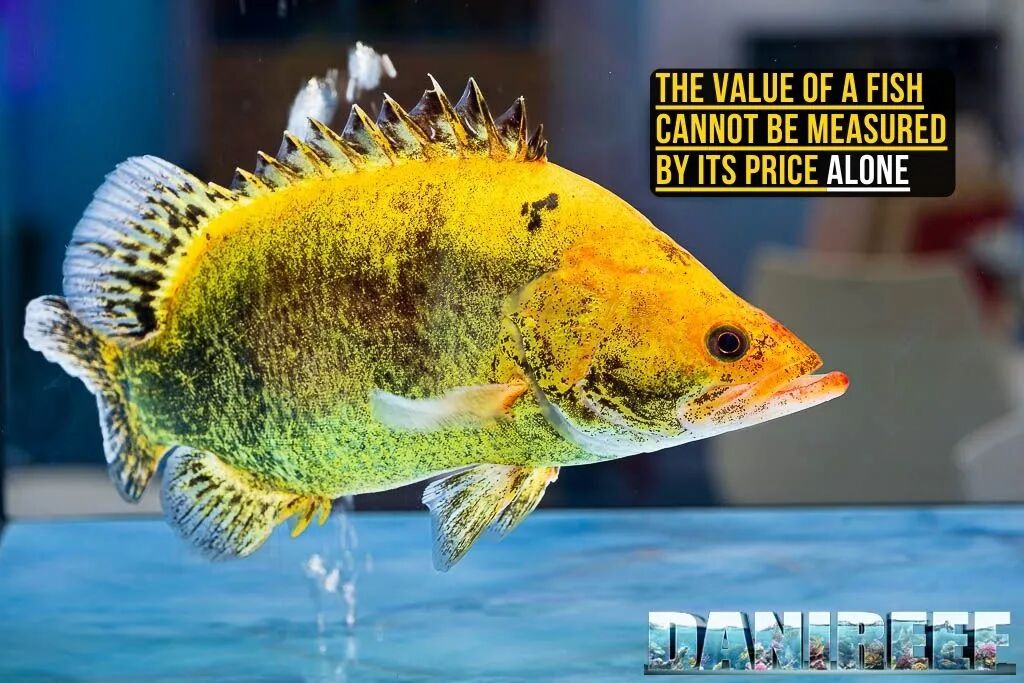
Among the fish that impressed us the most at CIPS 2025 were without a doubt the Siniperca, freshwater predators deeply connected to Chinese fishkeeping culture. Seeing them in person means coming into contact with an idea of discreet luxury, built on shape, color and behavior rather than ostentation.
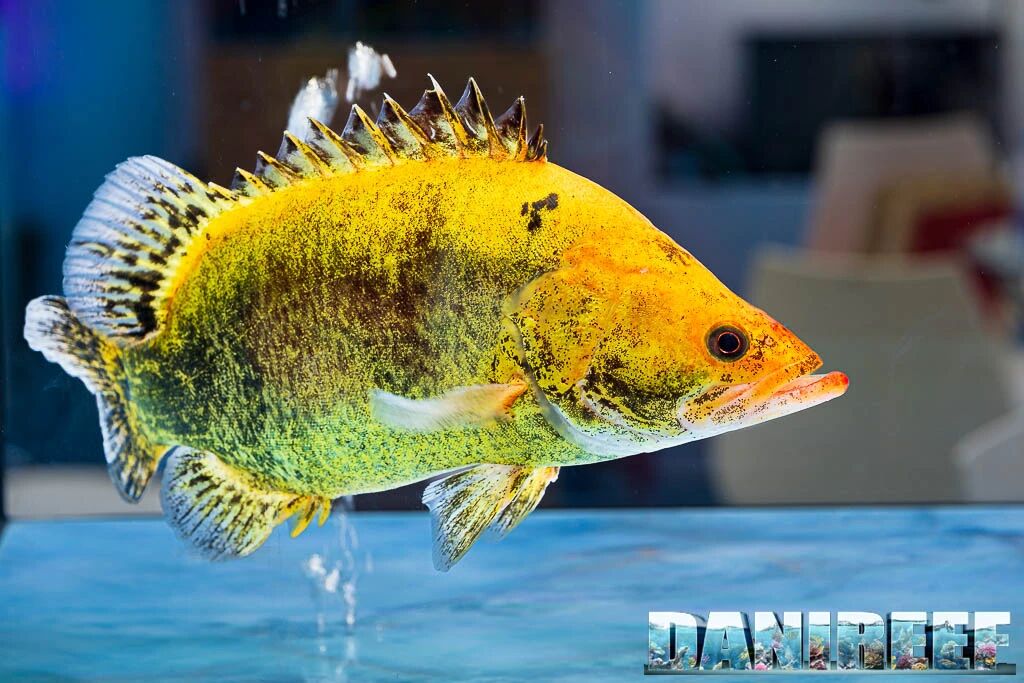
One of the most striking specimens we saw at the show was a Siniperca with an intense orange facial coloration—a very rare color for this genus, making the fish look almost unreal. It wasn’t just a spectacular color mutation: it was a perfectly proportioned animal, with posture, calmness and controlled movement that immediately conveyed the feeling of a truly exceptional specimen.
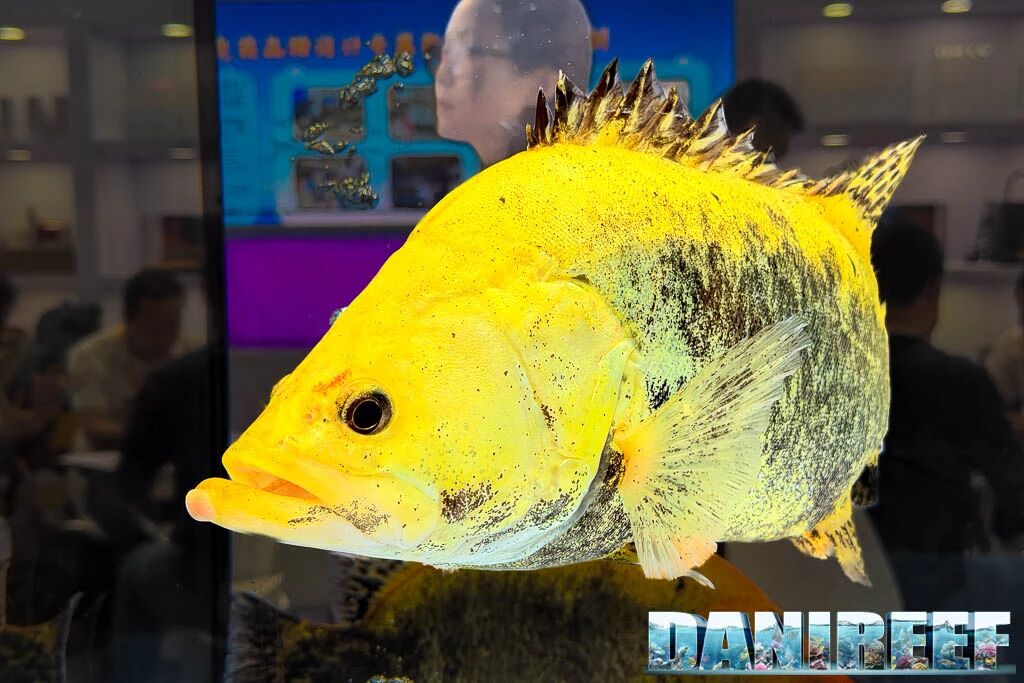
In the world of Siniperca, value is never linked to a single factor: size, lineage, color rarity, health and behavior all contribute to defining the importance of a specimen. Some fish—like the one with the orange face seen at CIPS—speak for themselves: you don’t need to ask the price to understand they’re destined for experienced collectors and top-tier setups.
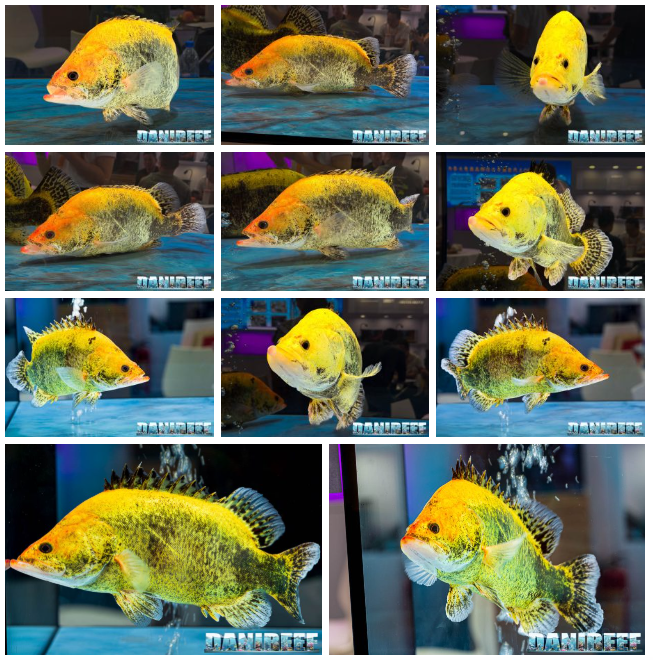
This is a very different approach from the Western one: here the fish is not a “rare piece” to show off, but a symbol of status, patience and knowledge, where aesthetics intertwine with respect for the animal and its long-term care.
The fish you saw is a Siniperca chuatsi in the Golden/Xanthic variant: a genetic rarity that requires selection and stabilization over time.
Monster fish: space, respect and awareness
Monster fish play a central role in high-end Asian fishkeeping. We’re talking about species that require very large tanks, powerful filtration systems, and careful management of behavior and feeding. They are not animals “for everyone”, and that’s precisely why they are approached with a mix of passion and discipline.
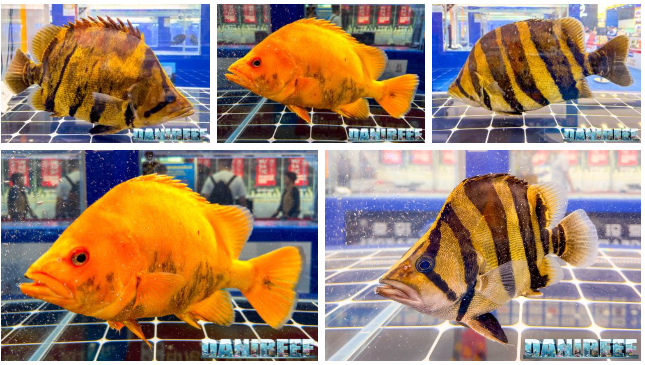
At CIPS we saw specimens kept in impeccable technical conditions, presented not as sensational attractions, but as ambassadors of a highly specialized niche. Here, the concept of luxury is inseparable from the ability to care for the animal properly over the long term.
Freshwater stingrays: genetics, patterns and selective breeding
Potamotrygon stingrays represent one of the most technical and selective segments of modern aquarium keeping. Each specimen tells a story made of bloodlines, unique patterns and morphological stability. No two individuals are identical, and it’s precisely this uniqueness that determines their value. We’re talking about highly sought-after lines and variants (such as Black Diamond, Leopoldi, and several Albino/Pearl selections).
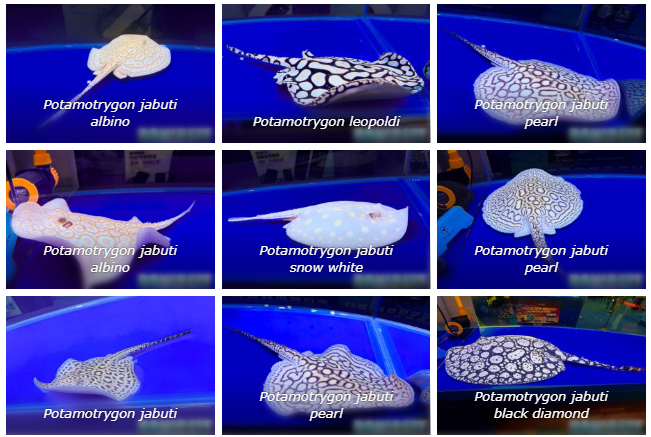
Potamotrygon stingrays (like the spectacular Black Diamond and the rare Albino variants seen at CIPS) represent one of the most technical areas of modern fishkeeping.
Evaluation criteria at CIPS:
Pattern symmetry: the layout of the spots must be harmonious;
Color purity: deep blacks and ice whites without “ghosting”;
Morphology: disk shape and tail health.
At the show, these animals are observed with the same eye used for evaluating a rare object: not only for aesthetics, but for the overall quality of the specimen—health, symmetry, and how it will develop over time.
Arowana: symbol, tradition and responsibility
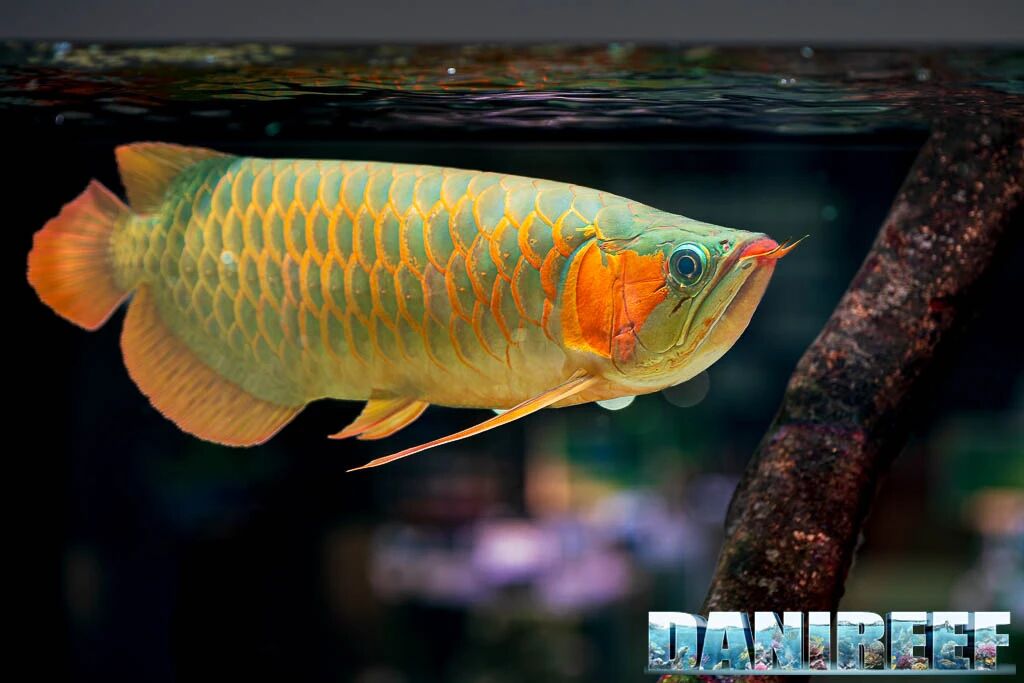
Talking about Asian Arowana (Scleropages formosus) means entering a dimension that goes beyond fishkeeping. In many East Asian cultures, these fish are symbols of prosperity, strength and continuity. Their breeding is regulated, traceable, and held to strict standards precisely because the value attributed to these animals is also cultural and identity-related.
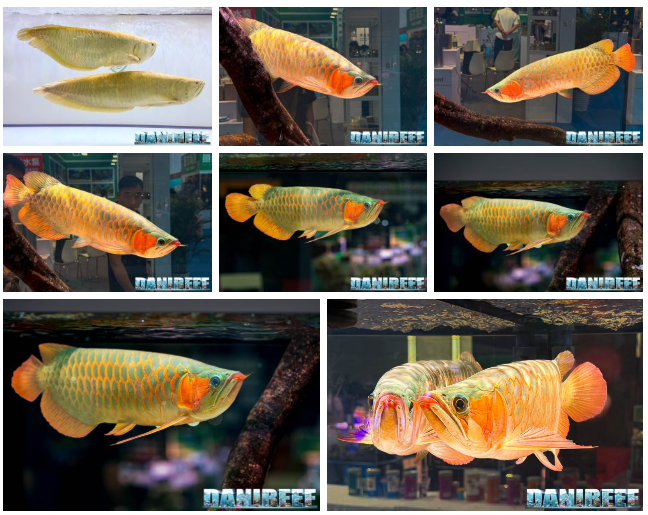
Seeing specimens of this level in person—presented in a sober and respectful way—helps you understand how the idea of “luxury” is deeply intertwined here with stewardship and responsibility. We’re talking about species subject to regulations and traceability (CITES and identification systems such as microchips, depending on the line and the circuit).
And in the video you’ll also see Super Red and Crossback Golden Arowana.
A language that looks to the future of fishkeeping
The world revolving around monster fish, stingrays and Arowana is not an exception, but a clear direction for global fishkeeping: greater attention to genetics, quality, traceability and long-term care.
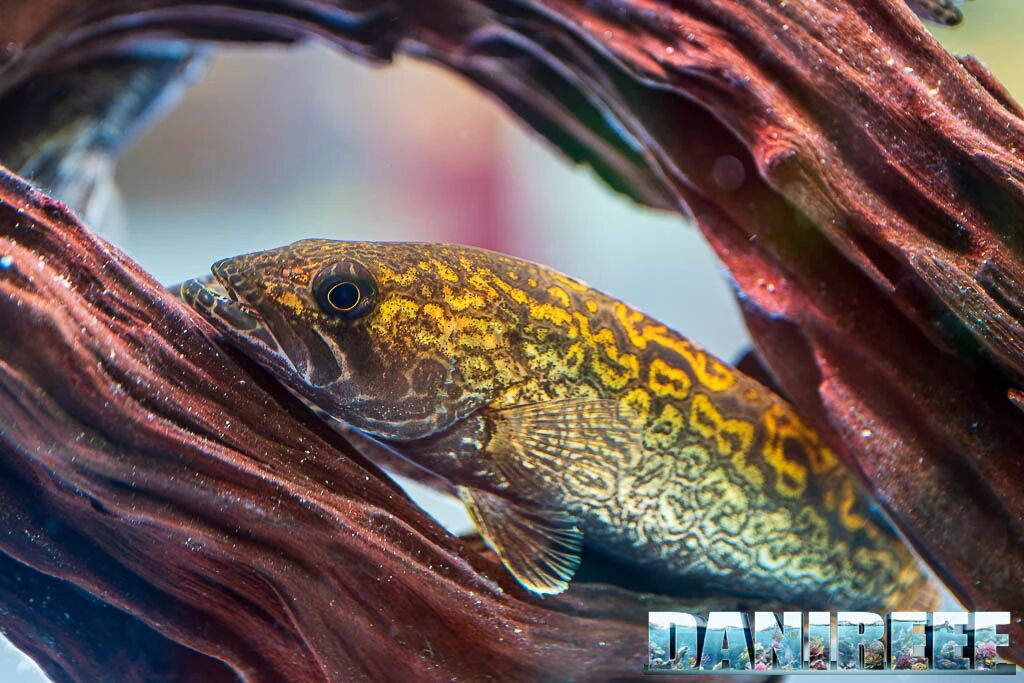
Events like CIPS show how Asian aquarium keeping has developed a mature language, where economic value is only one component within a broader system built on expertise, respect and vision.
Conclusions
Saying that “a fish can cost as much as a car” is a simplification. The reality is that, in some cases, a fish embodies the value of years of work, selective breeding and culture. Understanding this means looking at fishkeeping not only as a hobby, but as an expression of excellence.
And perhaps this is exactly where the future of the sector lies: in the ability to tell the story of these animals not as luxury objects, but as witnesses to a deep relationship between humans, nature and knowledge.
We also suggest reading our dedicated editorial about the show: there you’ll find links to all the articles we published about the booths, or watching our full video documentary, which tells the story of this wonderful edition of CIPS.
Copyright © 2008-2026 | China Great Wall International Exhibition Co., Ltd.