 China International Pet Show
After China’s Import Clarification: What It Means for the UK–China Pet Food Market
China’s recent clarification of its import requirements for UK-manufactured pet food has brought renewed attention to the dynamics of the UK–China pet food trade. While the announcement itself focuses on regulatory conditions, its broader significance lies elsewhere: it signals that China’s market is entering a phase where operating rules are more visible and expectations more explicit.
For industry participants, this moment is less about drawing immediate conclusions and more about reassessing how the market functions—how information moves between policy, buyers, and suppliers, and how clearer frameworks begin to influence real decision-making.
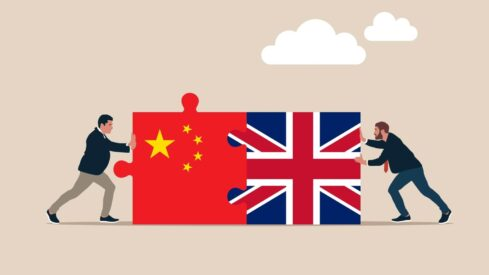
(This images is sourced from the internet, and all related copyrights belong to the original author.)
1. A Market Moving into a Clearer Rules Phase
Following a clarification issued on November 26, 2025, China’s import requirements for UK-manufactured dog and cat food do not represent a sharp policy shift. Instead, it reinforces a broader transition toward clearer and more standardized operating conditions. The update outlines, at a high level, the basic framework under which UK pet food may enter China—covering areas such as eligible product types, production and hygiene expectations, sourcing principles, and inspection procedures—without altering the underlying direction of the market.
For overseas exporters, the significance lies less in the technical details than in what this clarification signals. As regulatory expectations become more explicit, ambiguity is reduced, and the market becomes easier to read. The focus begins to move away from whether engagement is possible, toward how the market is structured, where standards are converging, and what kinds of capabilities are increasingly expected.
At this stage, the task for industry participants is not to draw conclusions from policy alone, but to re-interpret the China market itself as one operating with clearer reference points for participation.

(This images is sourced from the internet, and all related copyrights belong to the original author.)
2. Clarity Does Not Equal Certainty
Clearer rules do not automatically translate into predictable outcomes. Policy defines the framework, but results are shaped by how buyers, channels, and brands respond to the same signals.
In practice, buyers interpret regulatory clarity through their own priorities—including risk tolerance, category focus, pricing logic, and information availability. Brands and suppliers respond accordingly, adjusting positioning, product formats, and communication strategies. Understanding and reaction develop in parallel, rather than in a linear sequence.
In competitive markets, early change rarely appears as a single decisive shift. It emerges gradually through sourcing conversations, buyer behaviour, and subtle changes in attention across categories. These dynamics cannot be read from policy documents alone; they become visible only when market participants interact and compare responses in real time.
3. CIPS as a Place to Observe Market Response
It is in this context that the China International Pet Show (CIPS) can be understood—as a place to observe how the market responds, rather than a mechanism that determines outcomes.
As one of the longest-running professional B2B platforms in China’s pet industry, CIPS has accompanied the market for nearly thirty years, from its early expansion to today’s more structured and specialised environment. Over time, the industry has moved from scale-driven growth to more refined, capability-based competition.
At its most recent edition, CIPS brought together over 1,200 exhibitors and 84,000+ professional visitors across a 100,000-square-metre exhibition space, with participation from more than 120 countries and regions. Its coverage across the full industry chain—from pet food and nutrition to manufacturing, OEM/ODM, packaging, and related services—offers a broad and representative snapshot of both supply and demand. Notably, more than 80% of exhibitors at CIPS offer OEM/ODM capabilities, reflecting a supply base that is not only product-complete, but structurally equipped to respond to shifting sourcing requirements and regulatory conditions.
Rather than providing definitive answers, CIPS functions as a market sample. It allows industry participants to observe how suppliers position themselves, how buyers engage, and how expectations align—or diverge—once regulatory frameworks become clearer. For those seeking to understand how the UK–China pet food market is recalibrating, such settings offer practical context beyond policy alone.
Reading the Market Beyond the Rules
China’s clarified import requirements mark an important moment for the UK–China pet food trade. Their value, however, lies not in the document itself, but in how the market absorbs and responds to greater transparency.
As the relationship between the two markets continues to evolve, the ability to observe, compare, and interpret market reactions will remain essential. Platforms like CIPS provide one way to do so—helping industry participants move beyond rule-reading toward a clearer understanding of how supply and demand adapt in practice.
For more information about CIPS 2026 and related industry insights, please visit the official CIPS website.
Copyright © 2008-2026 | China Great Wall International Exhibition Co., Ltd.